
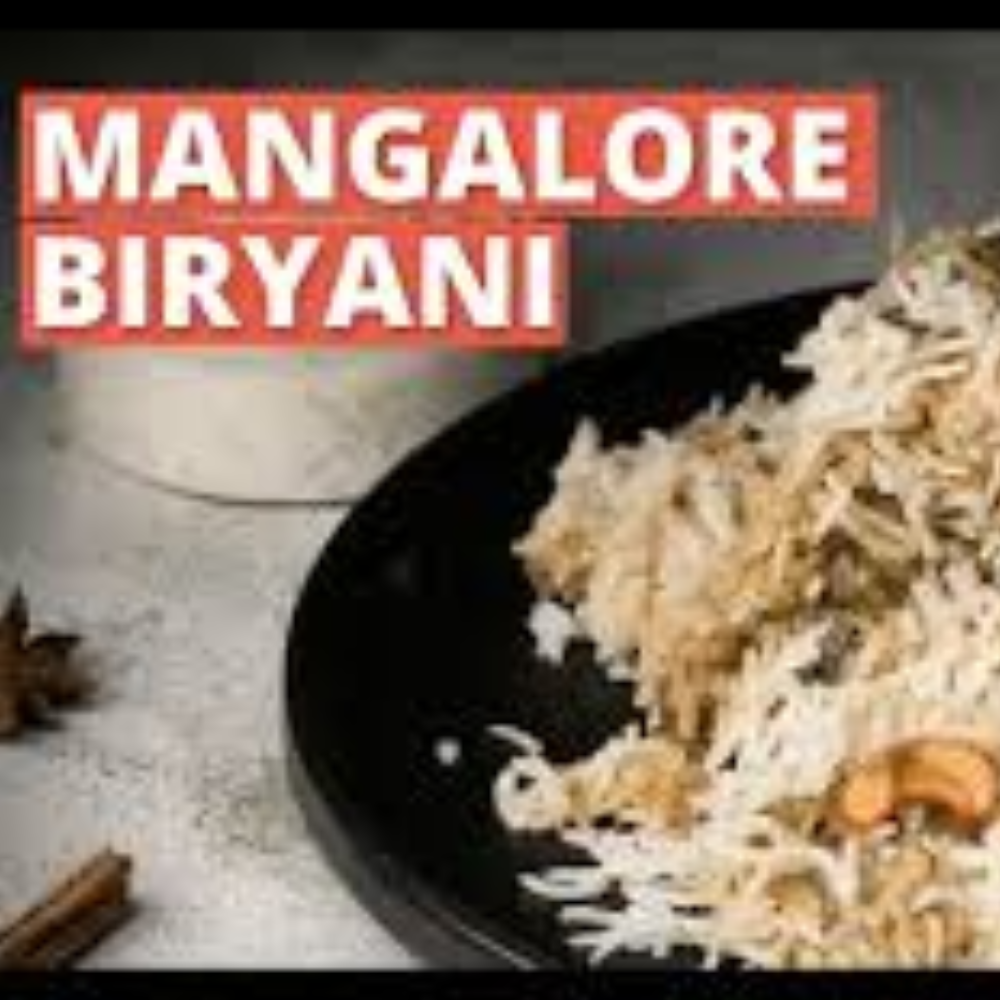
Mangalore Biryani is a vibrant and aromatic dish that stands as a culinary testament to the rich cultural tapestry of the coastal city of Mangaluru in Karnataka. Unlike its more famous Hyderabadi or Lucknowi counterparts, this biryani is deeply influenced by the region’s unique coastal location and its diverse communities, particularly the Mappila (Muslim) and Gowda (Mangalorean Hindu) culinary traditions. It is not merely a rice dish but a fragrant symphony that reflects the essence of Udupi-Mangaluru cuisine, known for its bold use of local spices, coconut, and a distinct tanginess.
This biryani is a celebration on a plate, often reserved for special occasions, family gatherings, and festive celebrations, embodying the warmth and hospitality of the region.What truly sets Mangalore Biryani apart is its unique flavour profile and cooking style. It is typically characterized by its pronounced use of souring agents—often kachampuli (a dark, souring vinegar from the Kodagu region) or tamarind—and a generous amount of freshly grated coconut or coconut milk, which lends a subtle sweetness and creamy texture. The rice used is usually the small-grained, fragrant Surti Kolam or Jeeraga Samba, which is layered with richly spiced, tender meat (most commonly chicken) and slow-cooked (“dum”) to perfection. The result is a biryani that is less oily than the northern versions, boasting a brilliant orange-red hue, a complex medley of spicy, tangy, and aromatic notes, and an unforgettable taste that is distinctly and proudly Mangalorean.
Background and Origin:
Mangalore Biryani, a distinct and aromatic rice dish, originates from the vibrant coastal city of Mangaluru in Karnataka, India. Its roots are deeply intertwined with the local Muslim communities, particularly the Mappilas, whose cuisine reflects a rich history of Arab trade and cultural exchange along the Malabar Coast.
Unlike the Mughlai-influenced biryanis of North India, Mangalore Biryani evolved from the broader South Indian biryani tradition, characterized by its unique blend of Malabar spices and a pronounced emphasis on tangy and fiery flavors, setting it apart as a culinary specialty of the region.The defining character of this biryani comes from its use of short-grain, small-particle jeera samba or kaima rice, which beautifully soaks up the vibrant masala without becoming mushy.
What truly distinguishes it is the signature souring agent—typically kachampuli (a dark, souring vinegar from the mangosteen fruit) or raw mango—which provides a sharp, tangy base that cuts through the richness. Heavily influenced by neighboring Kerala, the spice profile is robust, featuring black stone flower (dagad phool), byadgi chillies for colour, and a generous use of curry leaves and coconut oil, creating a uniquely fragrant, moist, and intensely flavorful dish that is a cornerstone of Mangalorean Muslim festivities and daily life.
Main Ingredients:The distinct character of Mangalore Biryani comes from a specific set of ingredients:
Rice: The preferred rice is short-grain jeera samba or kaima (also known as biryani rice). These varieties are non-sticky, aromatic, and absorb flavors excellently.
Meat: Chicken or mutton (goat) are the most common choices, used with the bone-in for greater flavor.
Souring Agent: This is the defining element. Either kachampuli (a dark, sour vinegar from the Garcinia indica fruit) or raw green mango (finely sliced or grated) is used to provide a sharp tang.
Aromatics & Spices: A base of finely sliced onions, ginger, garlic, and green chilies. The spice blend includes coriander seeds, cumin, fennel, peppercorns, cinnamon, cardamom, cloves, and the distinctive black stone flower (dagad phool). Byadgi red chilies provide a vibrant colour without excessive heat, and a generous handful of fresh curry leaves is essential.
Others: Coconut oil is the traditional cooking medium, lending a signature aroma. Yogurt is used for marinating the meat, and fresh coriander and mint leaves are added for freshness.
Method:
The method follows a layered dum (slow-steaming) technique, but with a Mangalore-style masala base.
1. Marination: The meat is marinated for a few hours in a mixture of yogurt, ginger-garlic paste, salt, and a portion of the biryani spice powder. This tenderizes the meat and allows the flavors to penetrate.
2. Preparing the Rice: The rice is washed and parboiled in a large volume of water with whole spices like bay leaf and cardamom until it is about 70-80% cooked. It is then drained completely.
3. Making the Masala Base: In a heavy-bottomed pot, coconut oil is heated. A tempering of whole spices is done, followed by sliced onions, which are fried until deep golden brown. Ginger, garlic, green chilies, and curry leaves are added, followed by the main biryani spice powder. Theu marinated meat is then added and browned.
4. Cooking the Meat: The souring agent—kachampuli or rawt mango—is added to the meat along with some water. The meat is then cooked on a medium flame until it is tender and the gravy is thick and clings to the pieces. The result is a intensely flavored, tangy, and dry-ish masala base.
5. Layering (Dum): Once the meat is cooked, layers are created in the same pot. Half of the parboiled rice is spread over the meat masala. This is topped with a layer of fried onions, mint, and coriander leaves. The remaining rice is added as the final top layer, which is again garnished with fried onions and herbs.
6. Sealing and Slow Cooking (Dum): The pot is sealed tightly with a lid, often with a ring of dough around the rim to trap the steam. It is then cooked on a very low heat (dum) for 20-30 minutes. This allows the flavors to meld together, the rice to finish cooking in the aromatic steam, and the top layer to remain fluffy while the bottom layer absorbs the meat’s tangy masala. It is gently fluffed with a fork before serving.


