
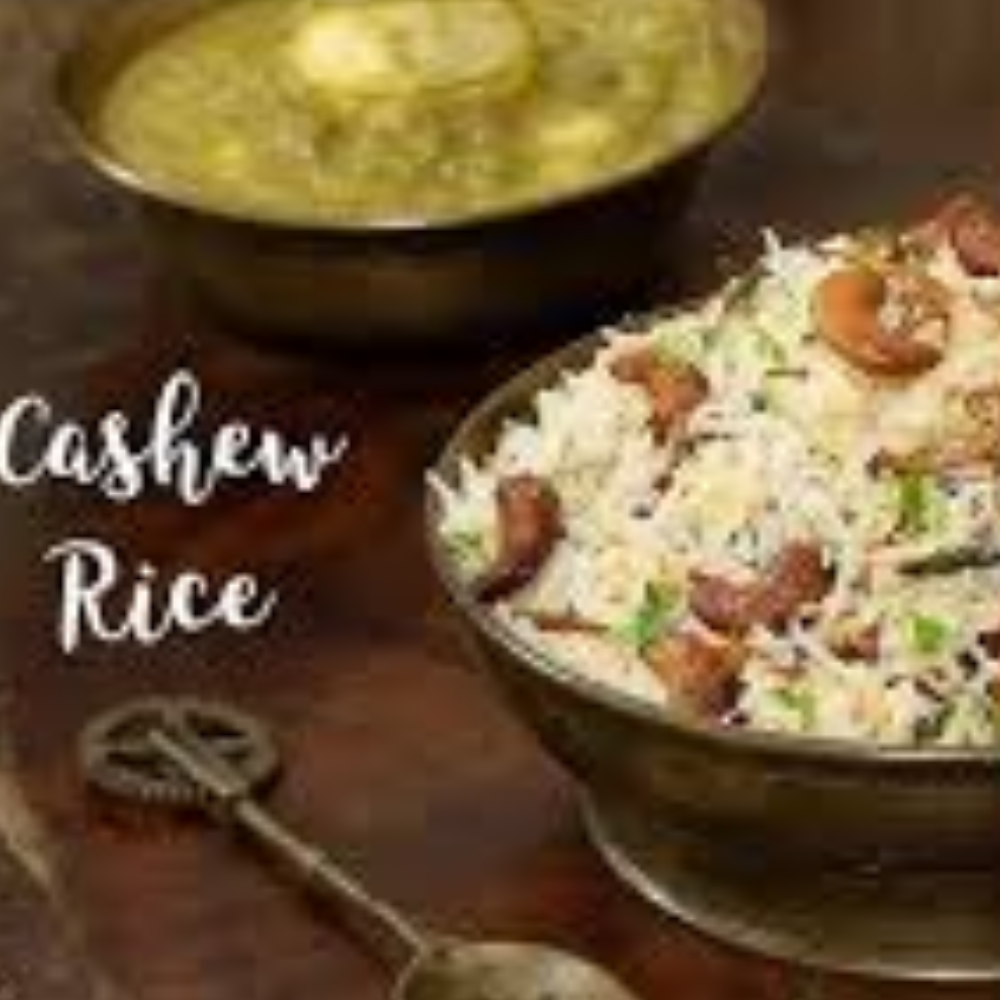
Kaju Pulao is an elegant and aromatic rice dish that elevates the humble everyday meal into a celebration of flavour and texture. True to its name, which translates to “Cashew Rice,” the star ingredient is the generous use of whole, golden cashew nuts (kaju), which are first lightly fried to release their rich, buttery flavour. This dish is a beautiful symphony of fragrant long-grain basmati rice, delicately spiced with whole aromatics like cinnamon, cloves, and cardamom, and often studded with colourful vegetables like peas, carrots, and beans. Unlike heavier biryanis or pulaos, Kaju Pulao is typically lighter on spices, allowing the natural sweetness of the nuts and the perfumed rice to take centre stage, resulting in a dish that is both sophisticated and comforting.
The preparation of Kaju Pulao is a testament to its status as a dish often reserved for special occasions and festive gatherings. It is a popular feature on banquet menus and at home during celebrations like weddings and festivals, symbolising prosperity and generosity. The cooking process involves gently sautéing the whole spices in ghee or oil to create a fragrant base, followed by the toasting of the cashews until they are golden. The rice is then cooked in this infused fat along with the vegetables, allowing each grain to absorb the subtle flavours without becoming mushy. Served hot, often alongside a simple raita or a rich curry, Kaju Pulao is a complete meal that delights the senses with its visual appeal, enticing aroma, and a delightful contrast of soft rice and crunchy, luxurious nuts.
Background and Origin:
Tracing the precise origin of Kaju Pulao leads us to the broader culinary tradition of the Indian subcontinent, where pilaf or pulao has been a staple for centuries. Its history is deeply intertwined with the Mughal influence, which championed the art of cooking fragrant rice with meats, nuts, and dried fruits. Kaju Pulao, however, is a more specific and refined evolution, likely emerging from the royal kitchens of North India and the Awadhi region (modern-day Lucknow). In these kitchens, the use of expensive ingredients like cashew nuts was a symbol of affluence and hospitality. The dish represents a vegetarian adaptation of meat-based pulaos, where the rich, buttery cashews were used to provide a luxurious texture and depth of flavour that could rival any meat ingredient, making it a prestigious offering for festive occasions and banquets.
While not tied to a single inventor or date, Kaju Pulao’s background is firmly rooted in the socio-economic context of its time. Cashews, introduced to India by Portuguese traders in the 16th century, were initially a luxury item. Creating a dish where they were a primary ingredient, rather than just a garnish, was a deliberate display of wealth and culinary sophistication. Over time, as cashews became more accessible, the recipe filtered down from aristocratic feasts to become a beloved specialty in Hindu and Jain vegetarian communities, where it is prized for its richness without the use of onions or garlic in its purest form. Today, it stands as a testament to the adaptability of Indian cuisine, born from royal traditions but now a celebrated dish enjoyed across the country and beyond, embodying a perfect blend of simplicity and opulence.
Main Ingredients:
Here are important ingredients for making Kaju Pulao ;
Basmati Rice: 1 cup, the foundation of the dish, known for its long grains and fragrance.
Cashew Nuts (Kaju): ½ cup, whole or split, the star ingredient that provides a rich, buttery flavor and crunch.
Aromatics: Whole spices like 1 bay leaf, 2-3 green cardamom pods, 1-inch cinnamon stick, 3-4 cloves, and 1 teaspoon cumin seeds.
Vegetables: Typically ½ cup of mixed vegetables such as carrots, green peas, and French beans, cut into small cubes.
Fats: 2-3 tablespoons of ghee (clarified butter) for authentic flavor, though oil can be used.
Liquid: 2 cups of water or vegetable stock for cooking the rice.
Seasoning: Salt to taste. A pinch of sugar is sometimes added to balance the flavors.
Garnish: Fresh coriander or mint leaves.
Method of Preparation:
This method should be followed;
1. Prepare the Rice: Wash the basmati rice thoroughly until the water runs clear. Soak it in water for 20-30 minutes, then drain completely. This step ensures the grains cook up long and separate.
2. Toast the Cashews: Heat ghee in a heavy-bottomed pot or pressure cooker. On a low flame, add the raw cashews and fry them, stirring constantly, until they turn a light golden brown. Remove them with a slotted spoon and set aside.
3. Temper the Spices: In the same ghee, add all the whole spices (cumin seeds, bay leaf, cardamom, cinnamon, cloves). Let them sizzle for 30 seconds until they release their aroma.
4. Sauté the Vegetables: Add the mixed vegetables to the pot and sauté for 2-3 minutes on a medium flame. They should remain crisp.
5. Cook the Rice: Add the drained rice to the pot and gently stir for a minute to coat the grains with ghee. Pour in the water or vegetable stock, add salt (and a pinch of sugar if using). Increase the heat and bring the mixture to a full boil.
6. Simmer and Cook: Once boiling, reduce the heat to the lowest setting. Cover the pot with a tight-fitting lid and let the rice cook for 15-20 minutes until all the water is absorbed and the rice is tender. (If using a pressure cooker, cook for one whistle on medium heat).
7. Final Fluff and Garnish: Once done, turn off the heat. Let the pot sit, covered, for 5-10 minutes. Then, open the lid, add the reserved fried cashews, and fluff the rice gently with a fork to separate the grains without breaking them.
8. Serve: Garnish with fresh coriander and serve hot with a side of cool raita or a simple gravy.


