
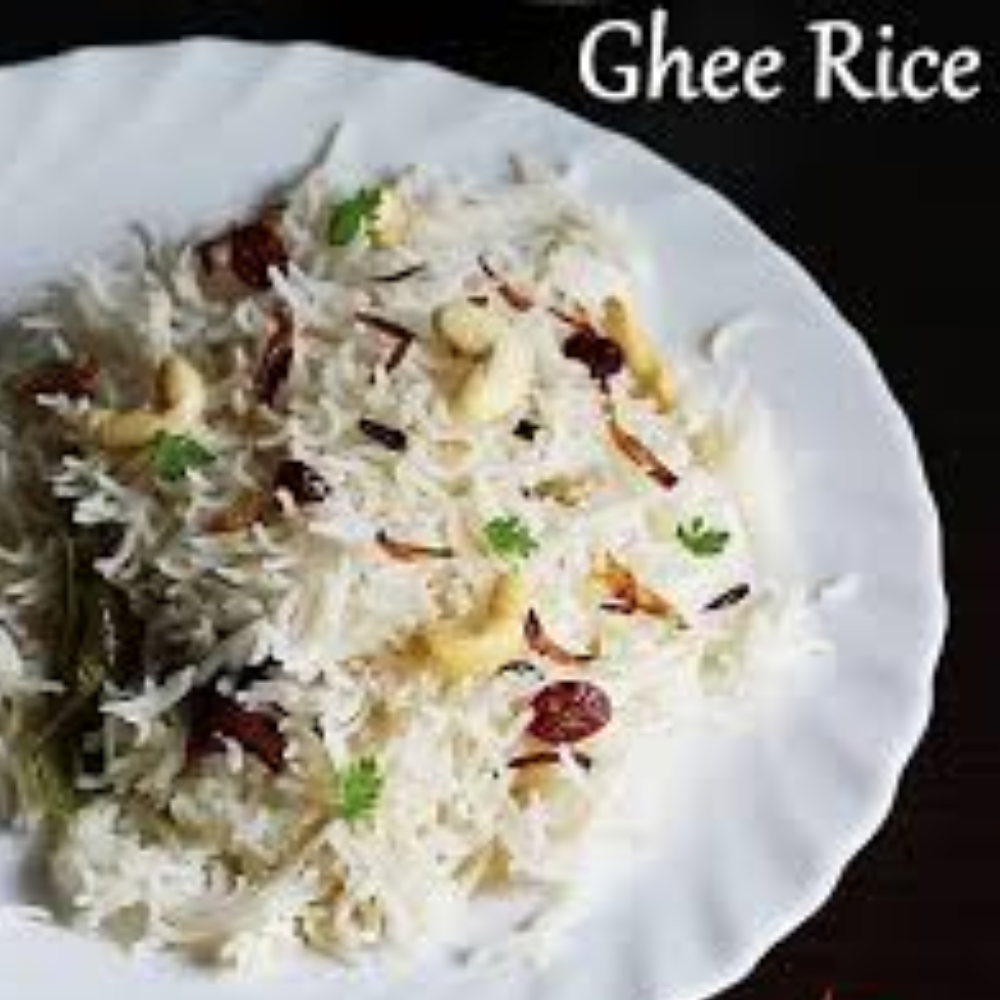
Ghee Rice is the epitome of simplicity meeting indulgence. Unlike elaborate biryanis or spicy pulaos, this dish has a quiet elegance, allowing the nutty, aromatic flavor of ghee to take center stage. It is a dish where every grain of rice is separate, glistening, and infused with the warmth of whole spices and the rich aroma of clarified butter.
It is a staple in many Indian households, particularly in South India (where it’s famously known as Nei Choru in Tamil and Malayalam), not as an everyday meal but as a special accompaniment to rich, flavorful curries. It acts as a perfect, neutral yet luxurious base that complements robust gravies without competing with them.
Origin and Background
Ghee Rice’s origins are deeply rooted in the culinary traditions of South India, especially Kerala and Tamil Nadu. However, variations of buttered or ghee-rich rice exist across the subcontinent, from the simple Ghee Bhaat of North India to the celebratory Mappillai Sorangai of the Tamil Muslim community.
- Cultural Significance: Ghee (clarified butter) holds a sacred and premium status in Indian culture. It is a symbol of purity, prosperity, and nourishment. Using a generous amount of ghee in a dish immediately elevates it from ordinary to festive. Ghee Rice is, therefore, commonly prepared for festivals, family gatherings, and special occasions.
- A Bridge Between Cuisines: In Kerala, Ghee Rice is a classic component of the Malabar Muslim feast, served alongside rich, non-vegetarian curries like Chicken Stew, Beef Ularthiyathu, or Mutton Curry. Its mild flavor is intentionally designed to balance the intense spices of these dishes.
- The “Bridegroom’s Rice”: A particularly famous version is Mappillai Sorangai (meaning “Bridegroom’s Feast” in Tamil), a robust and nutritious Ghee Rice dish loaded with nuts, spices, and meat. Legend says it was fed to the groom to build his strength for the wedding festivities!
In essence, Ghee Rice is more than just a recipe; it is a celebration of ghee itself, a cornerstone ingredient of Indian cooking.
Ghee Rice Recipe
- Prep Time: 10 minutes (plus 30 mins soaking)
- Cook Time: 20 minutes
- Total Time: 30 minutes (active cooking)
- Cuisine: South Indian (Pan-Indian)
- Yield: Serves 3-4 people
Ingredients
- 1 cup Basmati rice (or Jeerakasala rice for an authentic Malabar touch)
- 2 cups hot water (or vegetable/chicken stock for more flavor)
- 3-4 tablespoons pure ghee (this is key, do not substitute)
- 1 bay leaf
- 4-5 green cardamom pods, lightly crushed
- 3-4 cloves
- 1-inch piece of cinnamon stick
- 1 star anise (optional, but recommended)
- 1 medium onion, thinly sliced
- 2-3 tbsp cashew nuts
- 2-3 tbsp raisins (optional)
- 1 tsp salt (adjust to taste)
Instructions
Step 1: Prepare the Rice
- Rinse the basmati rice under cold water until the water runs clear.
- Soak the rinsed rice in enough water for 20-30 minutes. This helps the grains elongate and cook evenly. After soaking, drain the water completely.
Step 2: The Tempering (Tadka)
- In a heavy-bottomed pot or pressure cooker, heat the ghee over medium heat.
- Add the whole spices—bay leaf, cardamom, cloves, cinnamon, and star anise. Sauté for 30 seconds until they become fragrant.
- Add the cashews and raisins. Fry until the cashews turn golden brown and the raisins plump up. Remove them with a slotted spoon and set aside for garnishing.
- In the same ghee, add the thinly sliced onions. Sauté until they turn soft, golden, and caramelized. This adds a wonderful sweetness to the rice.
Step 3: Cooking the Rice
- Add the drained, soaked rice to the pot. Gently stir for 2-3 minutes on low heat until each grain is well-coated with ghee and the rice turns slightly translucent. This step is crucial for preventing the rice from becoming sticky.
- Pour in the hot water (or stock) and add the salt. Stir gently once.
- Increase the heat to high and bring the water to a rolling boil.
- Once boiling, immediately reduce the heat to the lowest possible setting. Cover the pot with a tight-fitting lid.
- Let the rice cook for 12-15 minutes. Do not peek during this time. The rice will absorb all the water and steam perfectly.
Step 4: The Final Touch (Dum)
- After 15 minutes, turn off the heat. Do not open the lid immediately. Let the rice rest, covered, for another 10 minutes. This resting period, called “dum,” allows the rice to finish cooking in its own steam, resulting in perfectly fluffy grains.
- After resting, open the lid. Fluff the rice gently with a fork.
- Garnish with the reserved fried cashews and raisins.
Serving Suggestions
Ghee Rice is never served alone. It is designed to be paired with intensely flavored dishes:
- Classic Pairings: Chicken Curry, Mutton Rogan Josh, Kerala Beef Ularthiyathu, or Prawn Masala.
- Vegetarian Options: Dal Makhani, Paneer Butter Masala, or a flavorful Vegetable Kurma.
- With Raita: A simple boondi raita or cucumber raita on the side is always welcome.
Enjoy this bowl of fragrant, comforting luxury!


