
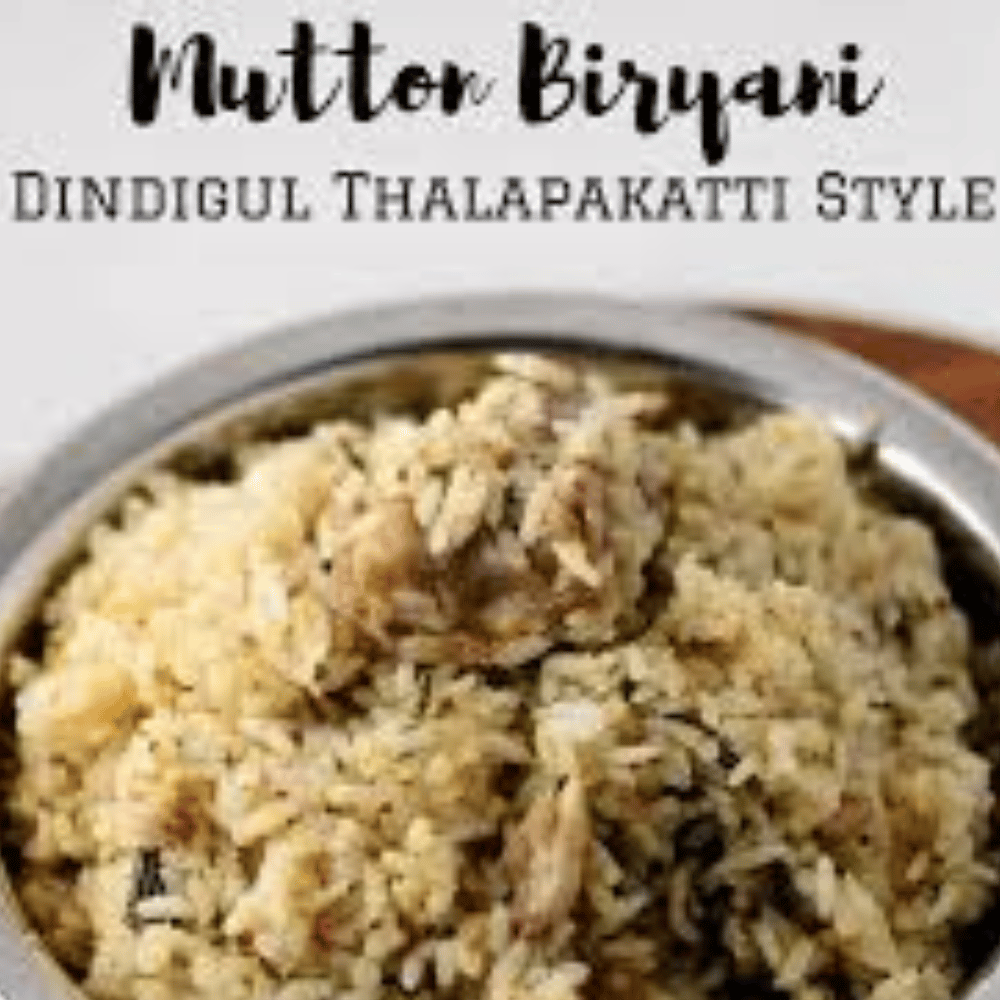
Dindigul Biryani is a celebrated regional biryani from the city of Dindigul in Tamil Nadu, South India. It stands out starkly from its more famous Hyderabadi and Lucknowi cousins. It’s known for being distinctly spicy, robust, and aromatic, with a unique “pepperish” kick.
Its defining features are:
- Jeera Samba Rice: It uses a specific, short-grain rice called Jeera Samba instead of Basmati. This rice is smaller, stouter, and absorbs flavours brilliantly, giving the biryani a unique texture and appearance.
- Cube-Sized Meat: The meat (almost always chicken or mutton) is meticulously cut into small, uniform cubes, ensuring every piece is well-coated in the masala and cooks evenly.
- Spice Profile: A heavy use of black stone flower (kalpasi or pathar ke phool) and black pepper gives it its signature earthy, peppery heat.
- No Curd or Food Colour: Unlike many North Indian biryanis, it typically uses little to no curd in the marination and is devoid of saffron or food colour, resulting in a brownish-grey hue that is all about the spices.
- Aromatic Broth (Yakhni): The meat is cooked in a thin, intensely flavoured broth, which is then used to cook the rice, infusing every grain with flavour.
Origin and History
Dindigul Biryani’s story is deeply intertwined with the city of Dindigul itself. The credit for popularizing this style is largely given to the “Thalappakatti” restaurant, which started in 1957. The name “Thalappakatti” refers to the traditional turban (thalapa) worn by the founder, Nagasamy Naidu. The recipe was developed to create a biryani that was flavorful, satisfying, and used locally available ingredients. The abundant Jeera Samba rice from the surrounding Tamil Nadu region became the natural choice. The recipe was a hit, and over decades, the “Thalappakatti” brand became synonymous with Dindigul Biryani, leading to its nationwide fame. Today, many restaurants in and beyond Dindigul serve their version, but the core principles remain the same.
Dindigul Chicken Biryani Recipe
This recipe serves 4-5 people.
A. Ingredients
For the Marinade:
- Chicken: 750 g, bone-in, cut into small 1.5-inch cubes
- Thick Curd (Yogurt): ½ cup (optional, but helps tenderize)
- Lemon Juice: 2 tbsp
- Ginger-Garlic Paste: 2 tbsp
- Salt: to taste
- Turmeric Powder: ½ tsp
- Red Chilli Powder: 1.5 tsp (adjust to heat)
For the Biryani Masala (to be dry-roasted & ground):
- Fennel Seeds (Saunf): 2 tbsp
- Black Stone Flower (Kalpasi/Pathar ke Phool): 3-4 small pieces
- Black Pepper Corns: 1.5 tsp
- Cumin Seeds (Jeera): 1 tsp
- Bay Leaf: 1
- Cinnamon: 1-inch stick
- Cloves: 4-5
- Green Cardamom: 4-5
- Star Anise: 1
- Stone Flower (Kalpasi): 2-3 pieces
For the Gravy/Layering:
- Oil/Ghee: 4 tbsp (a mix is best)
- Onions: 3 large, thinly sliced
- Green Chillies: 4-5, slit lengthwise
- Tomatoes: 2 medium, finely chopped
- Mint Leaves (Pudina): 1 cup, tightly packed
- Coriander Leaves: ½ cup, chopped
- Water: As needed
For the Rice:
- Jeera Samba Rice: 2.5 cups (or substitute with small-grained Seeraga Samba or even Sona Masoori)
- Water: 5 cups (1:2 ratio for Jeera Samba)
- Bay Leaf: 1
- Cinnamon: 1-inch stick
- Salt: to taste
B. Method
Step 1: Marinate the Chicken
- Clean and pat dry the chicken cubes.
- In a large bowl, mix the chicken with all the marinade ingredients – curd, lemon juice, ginger-garlic paste, salt, turmeric, and red chilli powder.
- Cover and let it marinate for at least 1 hour (or up to 4 hours in the refrigerator).
Step 2: Prepare the Spice Powders
- Dry roast all the ingredients listed under “Biryani Masala” on a low flame until fragrant. Let it cool.
- Grind them into a coarse powder. This is your signature Dindigul biryani masala.
Step 3: Cook the Chicken Gravy
- In a heavy-bottomed pot or pressure cooker, heat oil and ghee.
- Add the sliced onions and sauté on medium heat until they are deep golden brown and crisp. Remove half for layering later.
- To the remaining onions in the pot, add the slit green chillies. Sauté for a minute.
- Add the marinated chicken. Cook on high heat for 4-5 minutes, sealing the chicken.
- Add the chopped tomatoes and half of the ground biryani masala. Cook until the tomatoes turn soft and mushy.
- Add half of the mint and coriander leaves.
- Add about ½ cup of water, cover, and cook until the chicken is 80% done. If using a pressure cooker, cook for 1 whistle on medium heat. The gravy should be thick. Let the pressure settle.
Step 4: Par-cook the Rice
- While the chicken is cooking, wash and soak the Jeera Samba rice for 20 minutes.
- In a large pot, bring 5 cups of water to a rolling boil. Add the whole spices (bay leaf, cinnamon) and salt.
- Drain the soaked rice and add it to the boiling water.
- Cook until the rice is 70% cooked (the grains will still have a firm raw core in the center). Drain the rice completely and set it aside.
Step 5: The Layering (Dum)
- On the partially cooked chicken gravy, sprinkle some of the remaining mint, coriander, and the reserved fried onions.
- Gently spread the par-cooked rice evenly over the chicken layer to form a top layer.
- Sprinkle the remaining ground biryani masala, fried onions, mint, and coriander leaves over the rice.
- Drizzle 2 tbsp of ghee and 2 tbsp of water around the edges.
- Seal and Cook (Dum): Cover the pot with a tight-fitting lid. You can seal the edges with wheat flour dough or place a heavy weight on the lid.
- Cook on the lowest possible heat for 15-20 minutes.
- Turn off the heat and let it rest, covered, for another 10-15 minutes. DO NOT OPEN THE LID.
Step 6: Serving
- Open the lid and gently fluff up the biryani from the side, mixing the rice and gravy layers together.
- Serve hot.
How to Serve & People to Serve
- Serving Size: This recipe comfortably serves 4-5 adults.
- Classic Accompaniments:
- Dindigul Brinjal Curry (Kathirikai Salan): A spicy, tangy aubergine curry is the classic and non-negotiable side dish for this biryani.
- Raita: A simple onion-tomato raita or a plain yogurt raita helps balance the heat. A boondi raita also works well.
- No Rich Gravies: Avoid serving it with creamy curries like Butter Chicken. The biryani itself is the star.
- Who is it for?
- Spice Lovers: This is a biryani for those who appreciate a bold, peppery heat rather than a mild, aromatic one.
- Adventurous Eaters: Perfect for anyone wanting to explore a truly regional and distinct style of biryani beyond the usual suspects.
- A Crowd-Pleaser: Ideal for a family dinner or a gathering where you want to serve something authentic and impressive.
Enjoy your journey into the heart of Tamil Nadu’s culinary heritage!


