
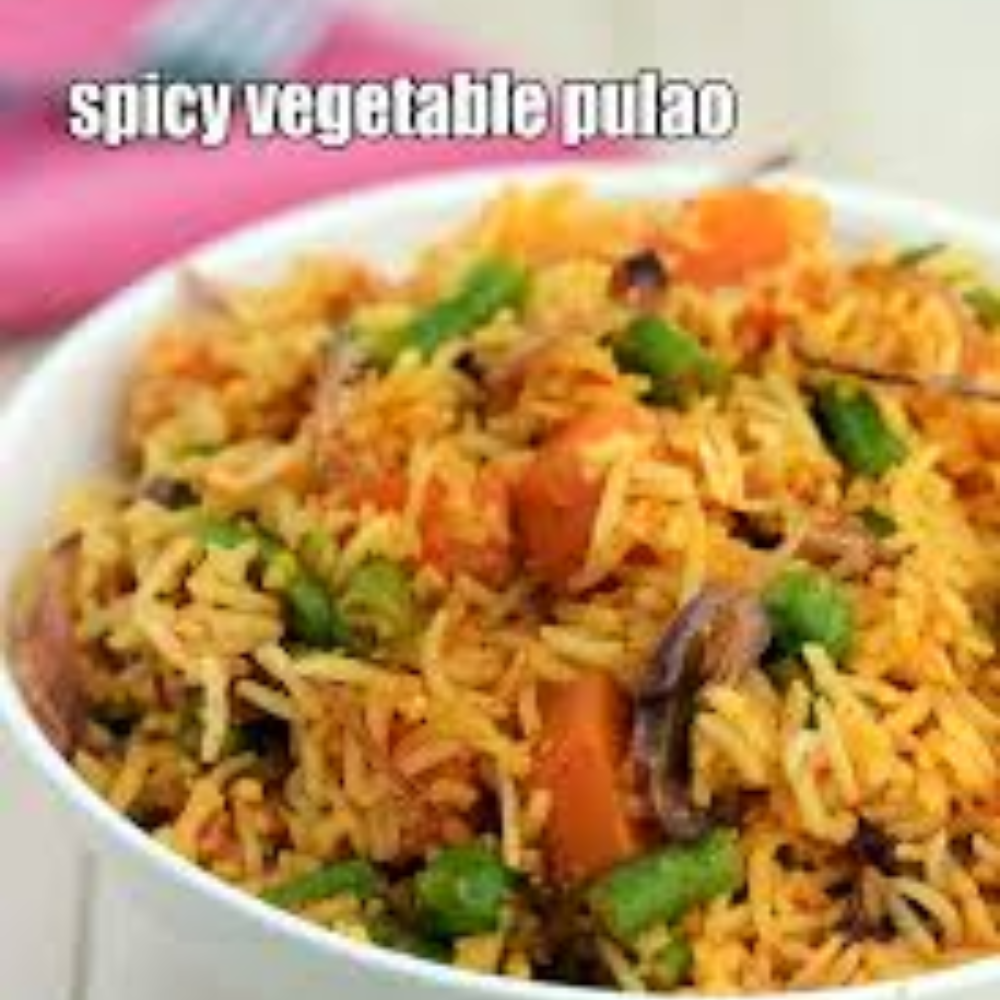
Vegetable Pulao is a classic and beloved rice dish that holds a place of comfort and celebration in many cuisines, particularly across the Indian subcontinent. It is an aromatic one-pot meal where fragrant long-grain basmati rice is gently cooked with a vibrant assortment of vegetables, such as carrots, peas, beans, and potatoes. The defining character of a good pulao comes from the whole spices like cumin seeds, cloves, cardamom, and bay leaves sizzled in oil or ghee at the start, which infuses the rice with a warm, subtle, and deeply inviting fragrance. Unlike its more complex cousin, the Biryani, Pulao is simpler to prepare, with the rice and vegetables cooked together in a seasoned broth, resulting in a harmonious and lightly flavored dish where no single ingredient overpowers another.
The beauty of Vegetable Pulao lies in its incredible versatility. It can be a humble, everyday meal served with a simple raita (yogurt sauce) or pickle, or it can be elevated for festive occasions with the addition of nuts, dried fruits, and saffron. Each region and household boasts its own signature version, from the delicate and mildly spiced ‘Peas Pulao’ of North India to the more robust and coconut-infused variations found in the South. This adaptability makes it a universal favorite, a dish that is both nourishing and satisfying, capable of pleasing a crowd or providing a simple, wholesome dinner for the family.
Background and Origin:
The origins of Pulao (also spelled Pilaf, Pilau, or Pulav) are ancient and traverse continents, with its earliest roots likely in the Persian Empire. The basic cooking technique sauteing rice in fat before simmering it in a seasoned broth was a clever method to create a flavorful, nutritious, and economical dish that could feed many. This method, known as the pilaf method, spread far and wide through trade routes, conquests, and cultural exchange, carried by Arab, Turkic, and Mughal empires. It became a staple from the Balkans across Central Asia and the Middle East, with each region adapting it to local ingredients and tastes. The dish was inherently versatile, allowing for the inclusion of whatever meats, vegetables, or spices were available.
Pulao was introduced to the Indian subcontinent with the Mughal invasions, beginning in the early 16th century. The Mughals, who had Persian culinary traditions, brought their sophisticated pulao recipes to the royal kitchens of the subcontinent. In India, the dish was enthusiastically adopted and adapted, incorporating the incredible diversity of local spices, vegetables, and rice varieties. While the Mughals often favored rich, meat-based versions, the widespread adoption of the dish, particularly in vegetarian communities and for everyday meals, led to the creation of the Vegetable Pulao. It became a distinct entity from the more elaborate Biryani (which uses a layering technique), representing a simpler, yet equally aromatic, everyday version of the royal dish, firmly embedding itself in the fabric of home cooking and regional cuisines across the region.
Main Ingredients:The simplicity of Vegetable Pulao lies in its short list of core ingredients, which come together to create a complex flavor.
Rice: The foundation is basmati rice, prized for its long grains, delicate fragrance, and non-sticky texture when cooked properly.
Aromatics: Onion, ginger, and garlic form the essential flavor base.
Vegetables: A classic mix includes carrots, green beans, peas, and potatoes. Bell peppers, cauliflower, or corn can also be added.
Whole Spices: This is what gives Pulao its signature aroma. Key spices include cumin seeds, bay leaves, green cardamom, cloves, black peppercorns, and a cinnamon stick.
Liquid: Water is standard, but using vegetable broth enhances the depth of flavor.
Fat: Ghee (clarified butter) is traditional and provides an authentic, rich taste, but neutral oils like vegetable or sunflower oil work well.
Garnishes: Fresh cilantro (coriander leaves) and fried onions are commonly used for garnish. Optional additions for special occasions include cashews and raisins.
Recipe Method:This method outlines the classic stovetop technique for a perfectly fluffy Vegetable Pulao.
1. Prep the Rice: Wash 1 cup of basmati rice in several changes of water until the water runs clear. Soak it for 20-30 minutes, then drain thoroughly. This step is crucial for achieving long, separate grains.
2. Sauté the Spices: Heat 2 tablespoons of ghee or oil in a heavy-bottomed pot or pressure cooker. Add the whole spices (1 bay leaf, 1 tsp cumin seeds, 2-3 green cardamoms, 2-3 cloves, 1″ cinnamon stick) and let them sizzle for 30 seconds until fragrant.
3. Cook the Aromatics: Add 1 sliced onion and sauté until golden brown. Then, add 1 teaspoon each of finely chopped ginger and garlic, and sauté for another minute until the raw smell disappears.
4. Add Vegetables: Add your chopped vegetables (about 1.5 cups total) and saute for 2-3 minutes on medium heat.
5. Cook the Rice: Add the drained rice to the pot. Gently stir for a minute to coat the grains in the ghee and spices, being careful not to break them. Pour in 2 cups of boiling water or vegetable broth. Add salt to taste. Bring the mixture to a vigorous boil.
6. Simmer to Cook: Once boiling, immediately reduce the heat to the lowest possible setting. Cover the pot with a tight-fitting lid and let it cook for 15-20 minutes. Do not stir during this time. The rice will absorb the liquid and steam.
7. Let it Rest (Dum): After 20 minutes, turn off the heat. Let the pulao rest, covered, for another 10-15 minutes. This “dum” (steam) resting period is essential for finishing the cooking process and allowing the flavors to meld.
8. Fluff and Serve: Finally, remove the lid and gently fluff the rice with a fork to separate the grains. Garnish with fresh cilantro and fried onions. Serve hot with a side of raita (yogurt sauce) or a simple salad.


