
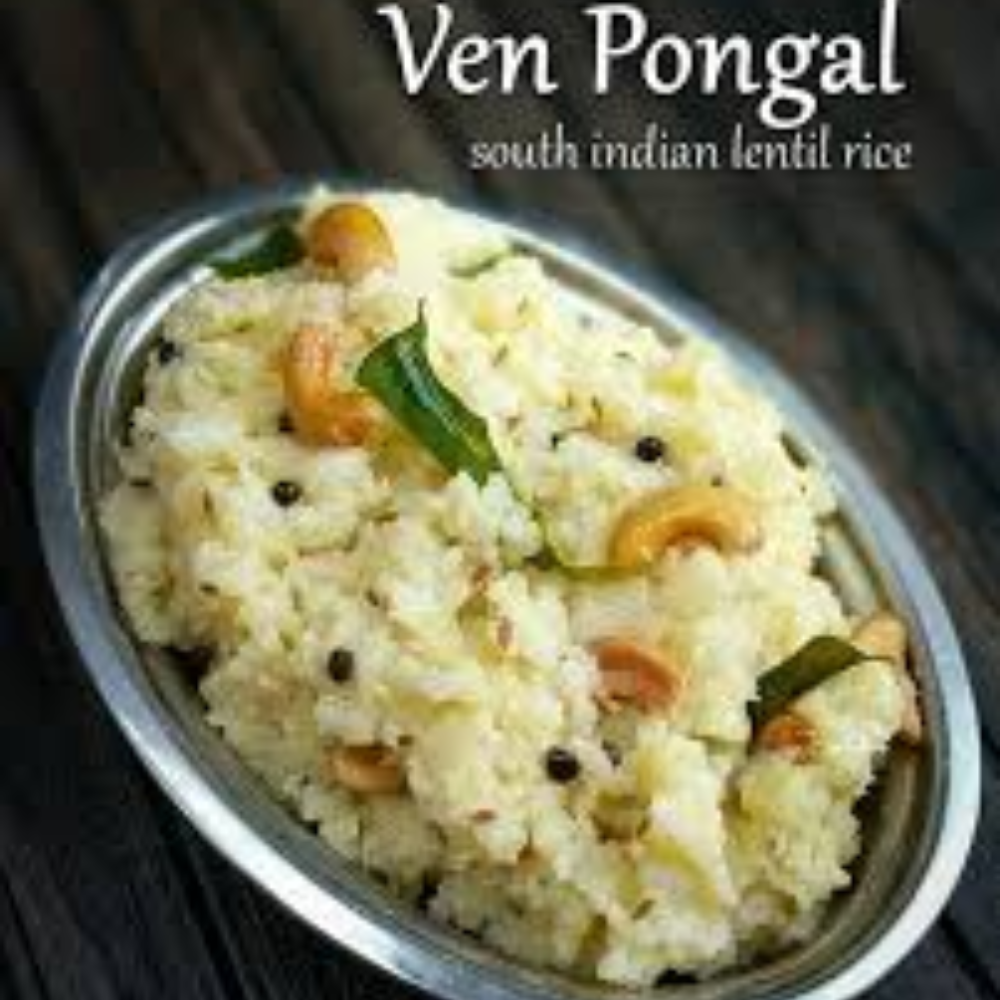
Ven Pongal which translates to “white pongal” (referring to its light color from the pepper), “spicy pongal,” is one of South India’s most beloved dishes. It is the ultimate breakfast comfort food, but is enjoyed any time of day. This dish is characterized by its soft, mushy, and porridge-like consistency, where the rice and lentils are cooked until they break down completely. The defining feature is its aromatic tempering (tadka) of cracked black pepper, cumin seeds, ginger, and cashews in abundant ghee, which gives it a warm, spicy, and deeply satisfying flavor profile. It’s simple, nourishing, and incredibly flavorful.
Origin and Background
Ven Pongal holds a significant place in the culinary and cultural landscape of South India, particularly in the states of Tamil Nadu, Andhra Pradesh, Karnataka, and Telangana.
- Cultural Significance: It is a central dish during the harvest festival of Pongal in Tamil Nadu, which is a four-day celebration dedicated to thanking the Sun God and nature for a bountiful harvest. The dish “Pongal” is named after the festival itself, and the act of allowing the pot to boil over (“pongu”) is considered a symbol of prosperity and abundance.
- Temple Prasadam: Due to its use of simple, satvic ingredients (no onion or garlic), it is a very common offering (Prasadam) in South Indian temples, especially in Venkateswara (Tirupati) temples, where it is famously served to devotees.
- Everyday Staple: Beyond its festive and religious importance, Ven Pongal is an everyday breakfast staple in millions of South Indian households. It is often paired with Coconut Chutney and Sambar and is praised for being easy to digest and providing sustained energy for the day.
Recipe Details
- Prep Time: 10 minutes (plus 20-30 minutes soaking)
- Cook Time: 25-30 minutes
- Total Time: 40 minutes
- Course: Breakfast, Main Course
- Cuisine: South Indian
- Yield: Serves 3-4 people
Ingredients
For Cooking Rice & Lentils:
- 1/2 cup Raw Rice (preferably short-grain like sona masoori) or Ponni Rice
- 1/4 cup Split Yellow Moong Dal (Pasi Paruppu)
- 4 cups Water
- 1/2 tsp Turmeric Powder
- 1.5 tsp Salt (or to taste)
- 1 tbsp Ghee (clarified butter)
For the Tempering (Tadka):
- 2-3 tbsp Ghee (more for a richer taste)
- 1 tsp Cumin Seeds
- 1 tbsp whole Black Peppercorns (slightly crushed or coarsely powdered)
- 1-2 inch piece Ginger, finely chopped or julienned
- 2-3 Green Chilies, slit lengthwise (optional, for extra heat)
- 10-12 Cashew nuts (optional, but highly recommended)
- 1 tsp Peppercorns, coarsely crushed (for an extra peppery kick)
- A generous pinch Asafoetida (Hing)
- 10-15 Curry Leaves
For Garnish:
- Fresh chopped Coriander Leaves
Instructions
Step 1: Prep the Ingredients
- Rinse the rice and moong dal together in water until the water runs clear.
- Soak them in enough water for 20-30 minutes. This helps them cook faster and become soft.
- While they are soaking, prepare the other ingredients: chop the ginger, slit the green chilies, and crush the black peppercorns lightly using a mortar and pestle.
Step 2: Cook the Rice and Dal
- In a heavy-bottomed pot or pressure cooker, add the drained rice and dal.
- Add 4 cups of water, turmeric powder, 1 tbsp ghee, and salt.
- Pressure Cooker Method: Cook for 5-6 whistles on medium heat, then let the pressure release naturally. The mixture should be very soft and mushy.
Stovetop Pot Method: Bring to a boil, then simmer covered for 25-30 minutes, stirring occasionally, until the rice and dal are completely soft and have a porridge-like consistency. You may need to add more water if it gets too thick. - Once cooked, mash the mixture lightly with the back of a spoon to achieve a uniform, slightly creamy texture. If it’s too thick, add a little hot water to adjust.
Step 3: Prepare the Tempering (The Most Important Step)
- In a small tempering pan or tadka pan, heat the remaining 2-3 tbsp of ghee over medium heat.
- Add the cashews and fry until they turn golden brown. Remove them with a slotted spoon and set aside.
- In the same ghee, add cumin seeds and let them sizzle.
- Add the crushed black peppercorns, chopped ginger, and slit green chilies. Sauté for 30 seconds until the ginger fragrant.
- Add the curry leaves and asafoetida. Let them crackle for a few seconds.
- Immediately pour this entire tempering mixture over the cooked rice and dal mixture.
Step 4: Combine and Serve
- Add the fried cashews back into the pot.
- Mix everything thoroughly but gently. The ghee and the aromatic spices will perfume the entire dish.
- Taste and adjust salt if needed.
- Garnish with fresh coriander leaves.
- Serve Ven Pongal piping hot.
Serving Suggestions
- Classic Combo: Serve with Coconut Chutney and Sambar. The coolness of the chutney and the tangy-savory sambar complement the peppery pongal perfectly.
- Simple Pairing: It is equally delicious with a dollop of ghee and a side of Medu Vada or Idli.
- Beverage: A hot cup of Filter Coffee or tea is the ideal beverage to complete the meal.
Enjoy the warm, comforting, and divine taste of this classic South Indian dish!


